
Published
Autor


From puppy soft coat to a dense adult coat—and how to manage the tangles along the way.
Your puppy’s fur used to be so easy. A little brushing, a bath, and that fluffy coat looked beautiful again.
Now, seemingly out of nowhere, there are tangles behind the ears, knots under the legs, and little mats appearing everywhere even though you’re still brushing.
What changed?
Your puppy may be transitioning into their adult coat. And the grooming routine that worked a few months ago need an update.
What Happens During Puppy Coat Change?
Puppies are born with a soft coat that looks and feel different from the coat they develop as adults. As the dogs mature, the texture, thickness, curl, and sometimes even color may change.
The timing varies considerably by breed and individual dog. Many puppies begin losing their puppy coat around six months, the visible change is noticeable right around 8 months of age, and this transition can take up to a year, developing the full adult coat takes time. So if you don’t want to trim the coat shorter during this phase, better get your brush ready.
For owners of longer or curly-coated dogs, this stage can come with an unexpected challenge: a coat that becomes much harder to keep tangle-free.
Your puppy didn’t suddenly become impossible to groom. Their coat is changing, and their care needs may be changing with it.

Why Is My Puppy Matting Even Though I Brush?
Brushing regularly helps, but how you brush matters just as much as how often.
A brush can glide over the surface and leave the hair looking fluffy while tangles remain closer to the skin. Loose hair left in the coat can also become caught in surrounding strands creating new mats, thats what we call impaction often seen in double coated breeds.
Add everyday movement and friction from a harness, collar, or playing, and those small tangles can become tighter mats quickly. Areas such as behind the ears, the armpits, and where equipment rubs deserve particular attention.
This is why “I brush every day” and “my puppy has mats” can both be true.
It doesn’t mean you haven’t been trying. You may simply need different tools, learn a different technique, or a more manageable coat length.

How to Check Whether You’re Reaching the Tangles
For many longer and curly coats, brushing in small sections helps you work through the hair more thoroughly.
Ask your groomer to demonstrate line brushing: gently lifting a section of hair and working through a small layer at a time, without scraping the skin.
While line brushing you should be able to see the skin at all times, glide the slicker brush through the coat by sections, you can also use a conditioning leave in spray like the Hydra Demmating spray.
A suitable comb can then help check your work. If it catches, pause and inspect that section with your slicker brush rather than pulling the hair with the comb.
The right brush and comb depend on your puppy’s coat and skin sensitivity. Short, gentle sessions with rewards help make handling a familiar experience.

At your next Mimo appointment, ask us to show you how to maintain the areas you find most difficult. A demonstration on your own dog can make the routine much easier to understand.
Does My Puppy Need a Shorter Haircut?
That could be a good idea if you dont have the time and energy to manage this transition period, but coat change doesn’t automatically mean every puppy needs a very short haircut.
A longer style requires more upkeep. During this challenging phase, a shorter, manageable trim may help you stay ahead of tangles while keeping grooming sessions comfortable.
The best haircut is one your puppy can comfortably wear and you can comfortably maintain.
There is no prize for keeping extra length if maintaining it becomes a daily struggle for you and your puppy.
What If My Puppy Already Has Mats?
Book an assessment before the tangles become more extensive.
Some small tangles can be gently worked out. Tight or widespread matting may require clipping, because prolonged brushing can cause pain and irritation. Don’t force a comb through a resistant mat or try to cut it out with scissors near the skin. Leave it to the professionals to prevent hurting your pup.
A shorter haircut can be a fresh starting point. From there, we can help you choose a routine and length that are easier to maintain.
Don’t Wait for Matting to Introduce Grooming
Ideally, your puppy’s first experience with professional grooming happens before they need significant detangling.
Once your puppy has completed the vaccination cycle, take them to the grooming salon even if its just for a bath. Introductory appointments can help them become familiar with brushing, bathing, drying, nail care, and gentle handling. Since this will be a part of their life forever, the sooner they learn to be comfortable with the visits the better.
The goal is to build comfort gradually.
For more on balancing haircuts with maintenance visits, read our guide to how often you should groom your dog.
Help for Your Puppy’s Changing Coat at Mimo
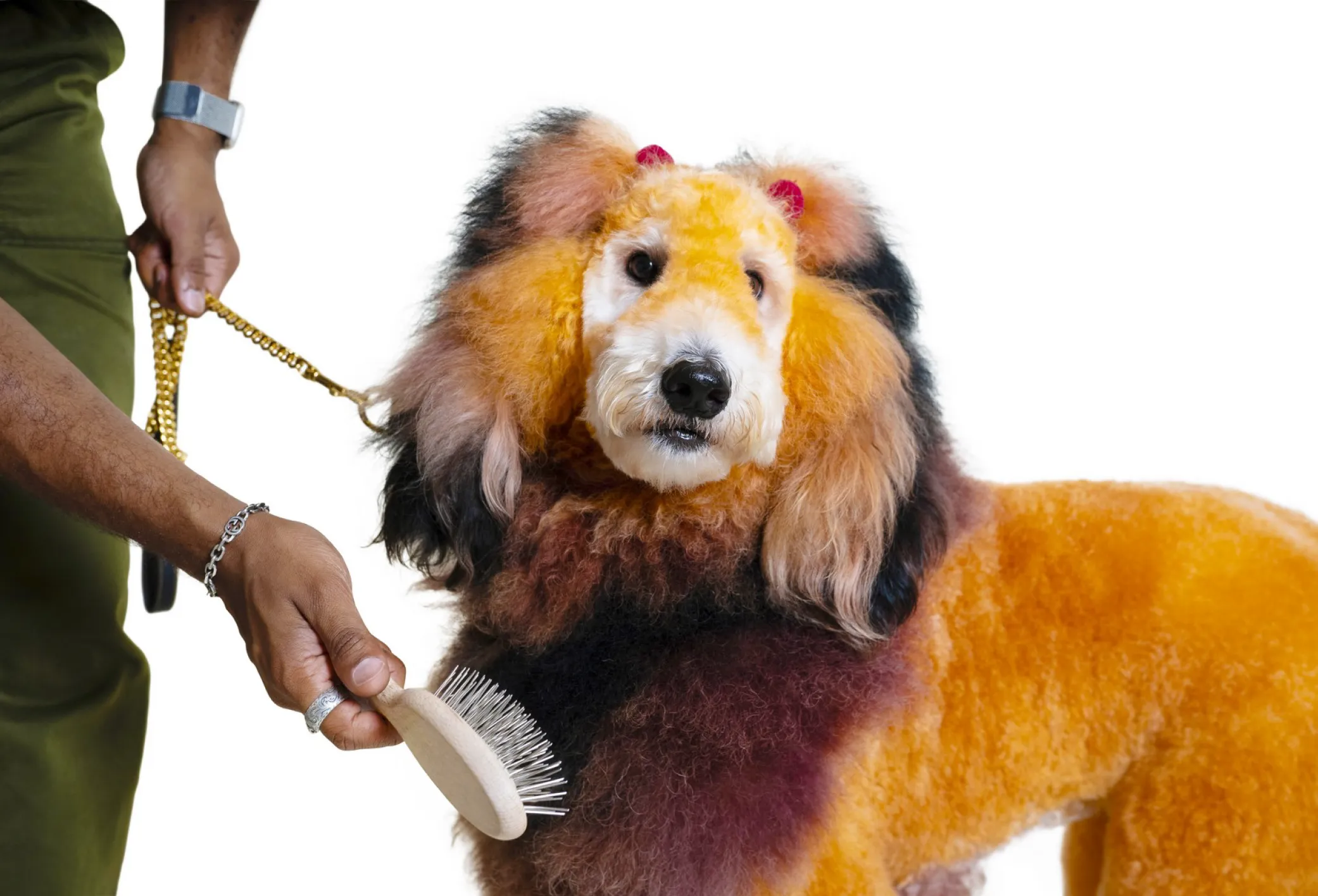
You don’t have to figure out this stage alone, dog grooming is kind of our favorite thing to do.
At Mimo’s University Heights and La Jolla studios, we can assess your puppy’s coat, recommend a manageable style, and help you understand what to do between appointments.
If brushing suddenly feels harder or tangles keep returning, it may be time to adjust the routine.
Request an appointment and let’s make a plan for the coat your puppy has today—and the one they’re growing into.

Grooming
What Should I Tell My Groomer?
How to ask for the haircut you actually want, with or without photos.
Read
Grooming
How Often Should You Groom Your Dog?
A simple guide to finding the right grooming schedule for your dog.
Read

Grooming
How Long Does Dog Grooming Take?
Why a full groom takes 3–4 hours, and what happens during that time.
Read